


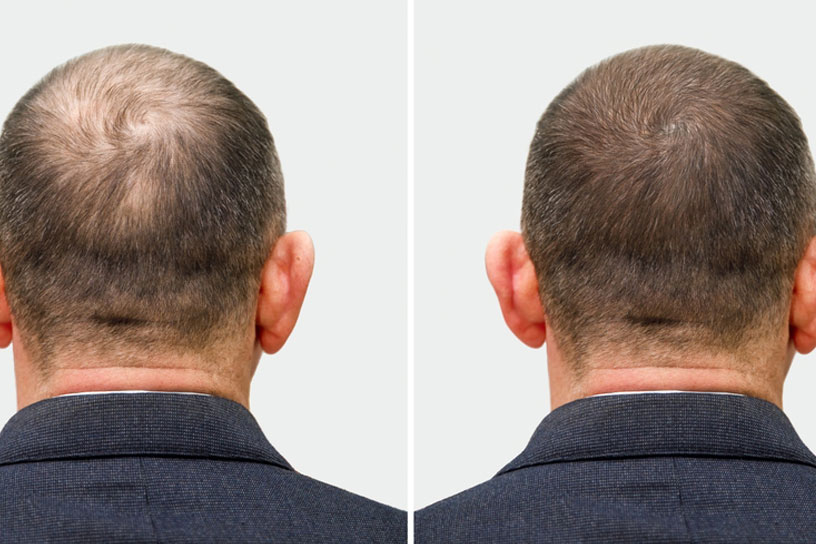
After thoroughly cleaning your scalp, a surgeon uses a small needle to numb an area of your head with local anesthesia. Two main techniques are used to obtain follicles for transplantation: FUT and FUE.
In follicular unit transplantation (FUT):
- The surgeon will use a scalpel to cut out a strip of scalp skin from the back of the head. The incision is typically several inches long.
- This is then closed with stitches.
- The surgeon next separates the removed portion of scalp into small sections using a magnifying lens and sharp surgical knife. When implanted, these sections will help achieve natural-looking hair growth.
In follicular unit extraction (FUE):
- The hair follicles are cut out directly from the back of the head through hundreds to thousands of tiny punch incisions.
- The surgeon makes tiny holes with a blade or needle in the area of your scalp that’s receiving the hair transplant. They gently place hairs in these holes.
- During one treatment session, a surgeon may transplant hundreds or even thousands of hairs.
- After, the graft, gauze, or bandages will cover your scalp for a few days.
A hair transplant session can take four hours or more. Your stitches will be removed about 10 days after surgery.
You may require up to three or four sessions to achieve the full head of hair you desire. Sessions occur several months apart to allow each transplant to fully heal.
Your scalp may be sore, and you may need to take medications following hair transplant surgery, such as:
- pain medication
- antibiotics to reduce your risk of infection
- anti-inflammatory medications to keep swelling down
Most people can return to work several days after surgery. It’s normal for the transplanted hair to fall out two to three weeks after the procedure. This makes way for new hair growth. Most people will see some amount of new hair growth 8 to 12 months after surgery.
Doctors prescribe MINOXIDIL or the hair growth medication FINASTERIDE to improve hair regrowth. These medications also help slow or stop future hair loss.
Side effects from a hair transplant are usually minor and clear up within a few weeks.
They can include:
- bleeding
- infection
- swelling of the scalp
- bruising around the eyes
- a crust that forms on the areas of the scalp where hair was removed or implanted
- numbness or lack of sensation on the treated areas of the scalp
- itching
- inflammation or infection of the hair follicles, which is known as folliculitis
- shock loss, or sudden but typically temporary loss of the transplanted hair
- unnatural-looking tufts of hair
Typically, people who’ve had a hair transplant will continue to grow hair in the transplanted areas of the scalp.
The new hair may appear more or less dense depending on:
- scalp laxity, or how to loose your scalp skin is
- the density of follicles in the transplanted zone
- hair calibre or quality
- hair curl
If you don’t take medication (such as minoxidil or finasteride) or undergo a low level of laser therapy, you may continue to experience hair loss in non-treated areas of your scalp.
It’s important to discuss the expected outcome with your surgeon and develop realistic expectations