The Department of Urology at JNU Hospital aims to provide medical care for a variety of urological ailments with its state-of-the-art equipment, best urologist in Jaipur and technologies including Endourological surgery, Ultrasound, Microsurgery, Laparoscopic surgery etc.
Due to its success, this department at the best urology hospital in Jaipur often serves as a referral centre for complicated problems for patients in Rajasthan, UP as well as MP.
Facilities
The Department of Urology provides medical services that include basic and advanced laparoscopic surgeries.
Areas of Expertise
The list of the area of expertise offered by the department is given below.
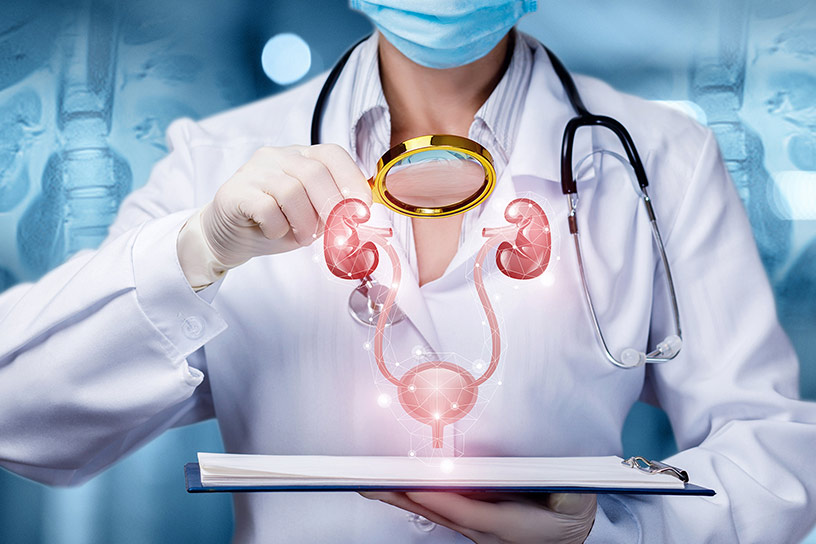
The department provides the following diagnostic services to patients who require medical care.
At Division of Urology & Andrology of JNU, we invest our efforts, time, and expertise to detect and treat various types of Ailments.
The most common type of bladder cancer is transitional cell carcinoma, also called urothelial carcinoma. Smoking is a major risk factor for bladder cancer. Bladder cancer is often diagnosed at an early stage. Explore the links on this page to learn more about bladder cancer treatment, screening, statistics, research, and clinical trials.
View DetailThe kidneys, ureters and bladder are part of your urinary tract. The urinary tract makes, moves, and stores urine in the body. The kidneys make urine from water and your body’s waste. The urine then travels down the ureters into the bladder, where it is stored. Urine leaves your body through your urethra. Kidney stones form in the kidney. If a stone leaves the kidney and gets stuck in the ureter, it is called a ureteral stone.
View DetailBPH is an enlarged prostate. While the prostate is usually the size of a walnut or golf ball in adult men, it can grow to be as large as an orange. As the gland enlarges, it can squeeze the urethra. If you are not able to pass urine at all (called retention) or if you have renal failure, immediate attention is required. This means it is not cancer, nor does it lead to cancer. Still, BPH and cancer can happen at the same time. If you have symptoms, it is of great value to get a complete diagnosis and learn what you can do to get relief. As you age, your prostate may get larger. BPH is when it gets large enough to cause problems. As the prostate enlarges, it presses against the urethra. The bladder wall becomes thicker. Over time the bladder may weaken and lose the ability to empty fully. Urine then remains in the bladder. These problems cause many of the lower urinary tract symptoms (LUTS) of BPH.
View DetailThe urethra is the tube that drains urine from the bladder to the outside of the body. In boys, the urethra starts at the lower portion of the bladder and continues through the penis. A urethral stricture is a narrowing in the urethra. This narrowing makes it difficult for urine to drain out. The narrowing may be congenital (present at birth) or the result of inflammation, injury, disease or prior surgery.
View DetailThe ureter is a long thin tubular structure 10-12 inches long which carries urine produced in the kidney to the bladder. The urine is transported by a process called peristalsis. The ureter actively propels urine from the kidney down into the bladder. Ureteropelvic junction obstruction is a condition where blockage occurs at the junction where the ureter attaches to the kidney. This results in decreased flow of urine down the ureter and an increase of fluid pressure inside the kidney. Increased pressure inside the kidney can over time cause deterioration of kidney function. The obstruction can be either congenital (the patient is born with it) or develop over time secondary to trauma or change in body shape with age. The blockage can be due to scar tissue, kinking, a blood vessel or rarely tumor.
View DetailPhimosis is the inability to pull the foreskin back over the head of the penis (glans). The head of the penis is covered by a tissue called the foreskin. The foreskin is usually loose and slides easily over the head of the penis. This movement allows the child to urinate or to become fully erect (in adolescents). Sometimes, though, the foreskin is too tight. It can close over the glans and become unable to move. Phimosis affects only boys and is normal in infants and toddlers. If an infant’s foreskin has not been removed surgically (circumcision), it is attached to the glans for the first few years. The foreskin typically separates between ages 2 and 6. Forcing your child’s foreskin back can cause pain and damage. In most cases, it will detach naturally on its own. Phimosis becomes less common with age. The foreskin can be pulled back behind the glans in about half of 1-year-old boys and in nearly 90% of 3-year-olds. Less than 1% of boys aged 16 – 18 years have phimosis.
View DetailUrethral cancer is a disease in which malignant (cancer) cells form in the tissues of the urethra. The urethra is the tube that carries urine from the bladder to outside the body. In women, the urethra is about 1½ inches long and is just above the vagina. In men, the urethra is about 8 inches long and goes through the prostate gland and the penis to the outside of the body. In men, the urethra also carries semen. There are different types of urethral cancer that begin in cells that line the urethra. Squamous cell carcinoma is the most common type of urethral cancer. It forms in the thin, flat cells in the part of the urethra near the bladder in women, and in the lining of the urethra in the penis in men. Transitional cell carcinoma forms in the area near the urethral opening in women, and in the part of the urethra that goes through the prostate gland in men. Adenocarcinoma forms in the glands that are around the urethra in both men and women.
View DetailPenile cancer (cancer of the penis) is rare. Almost all cancers of the penis are squamous cell cancers. Penile cancer (cancer of the penis) is rare. Almost all cancers of the penis are squamous cell cancers. Squamous cells are found in the skin. They cover the surface of most parts of the body. Most penile cancer is diagnosed over the age of 50. But it can also affect those who are younger. The penis is the male sex organ. It is made of different types of tissue, such as skin, muscle and nerves. During sexual arousal, blood flow to the penis increases to make it hard and erect. The penis also contains a tube called the urethra. The urethra carries semen (sperm) from the testicles and pee (urine) from the bladder out of the body.
View DetailBoy’s testicles normally descend from within the abdomen into the scrotum before birth. Approximately 3% of boys are born with their testicles undescended (not within the scrotum). Premature infants have a higher incidence of undescended testicles. About two-thirds of children born with undescended testicles will have descent of the testicles into the scrotum by six months of age. The incidence of undescended testicles at six months of age and older is 0.8%.
View DetailTesticular torsion is an emergency condition. It happens when the spermatic cord, which provides blood flow to the testicle, rotates and becomes twisted. The twisting cuts off the testicle's blood supply and causes sudden pain and swelling. Testicular torsion (also called testis torsion) requires immediate surgery to save the testicle. If testicular torsion goes on for more than a few hours, it can permanently damage the testicle, and a damaged testicle must be removed. The amount of twisting can be anywhere from 180-720 degrees. The degree of twisting affects how quickly a testicle gets damaged. As a general rule, within about 4 to 6 hours, the testicle can be saved 90% of the time. After 12 hours, this drops to 50%; after 24 hours, the testicle can be saved only 10% of the time.
View DetailManagement of kidney stones depends upon the size, exact location, consistency of stone, and patient condition.

Microsurgery in andrology is a new concept with immense potential to serve patients.
The urethra is one of the organs of the urinary tract that carries urine from the bladder so that it can be released from the body.
Transurethral resection of the prostate (TURP) is a surgery used to treat urinary problems due to an enlarged prostate.
JNU is home to some of the most eminent doctors in the world, most of whom are pioneers in their respective arenas and are renowned for developing innovative and revolutionary procedures

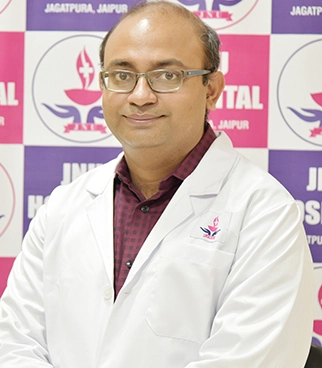



Senior Consultant - Nuclear Medicine
MBBS,MS, M. Ch.
Book an Appointment