Established in 2016, the Department of Surgery at JNUIMSRC offers the best medical care with its ultra-modern OT complex that has seven modular OTs equipped with cutting-edge technology and best laparoscopic surgeon in Jaipur.
The department at the best laparoscopy hospital, also has its own OPD complex, teaching area, separate multiple male and female wards, having 150 dedicated beds along with SICU, burn ICU and casualty. There are five surgery units working seamlessly and regularly to perform advanced general and laparoscopic surgeries such as Bariatric, Oesophageal, Pancreatic, Endocrinal, Colorectal, Hemicolectomy, Gastrectomy, Laparoscopic Cholecystectomy, along with other routine surgeries.
High-class museum, simulators and skills labs for clinical training are also available in the department. Quality diagnostic facilities are provided by the Department of Pathology, Microbiology and Radiology. During major surgeries, major roles are played by the blood bank and frozen section facilities.
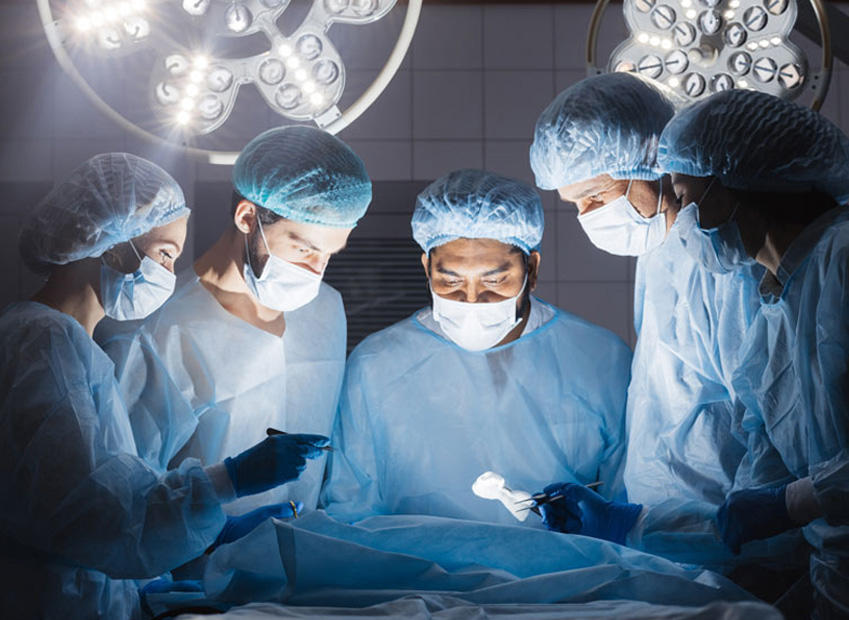
Since the establishment, the department has thousands of successful surgeries due to the doctors who possess vast experience in performing even the most complex surgeries. The faculty is constantly involved in academic, teaching, research work, and is updated with the latest technology and guidelines with an ‘ethical and friendly approach’.
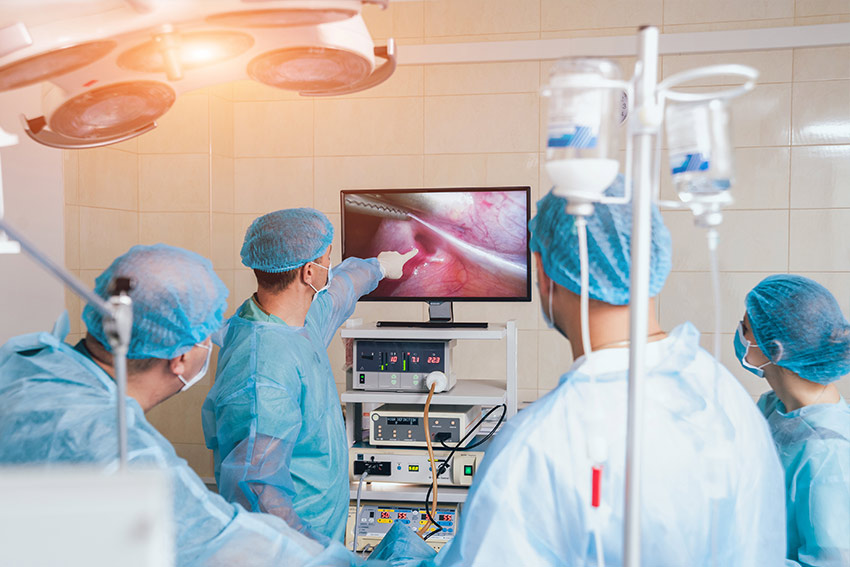
Some of the speciality clinics offered by the Department of Surgery at JNUIMSRC are given below.
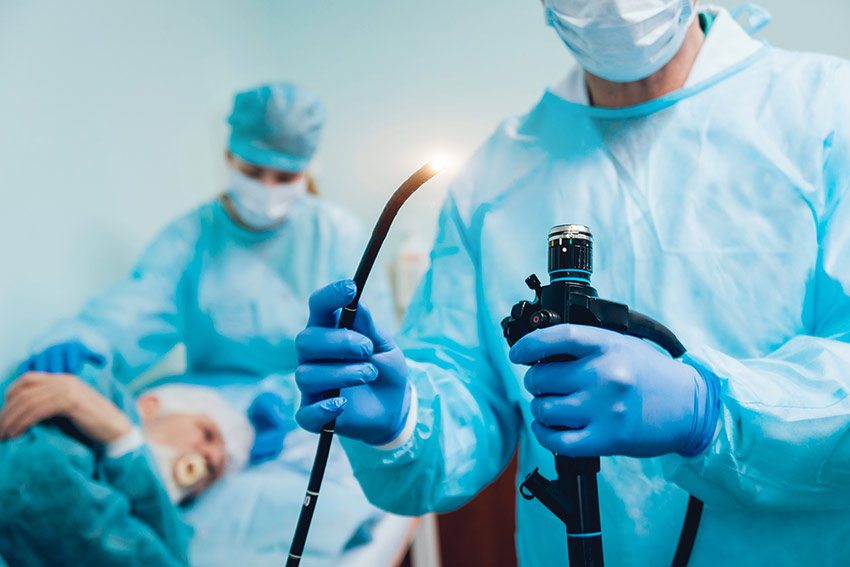
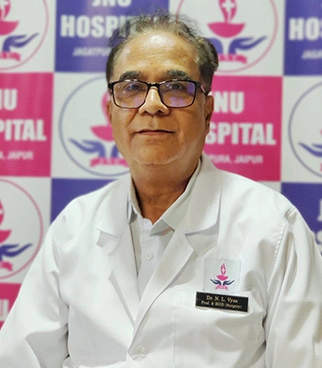

“It is my pleasure to welcome you to the Department of Surgery at JNUIMSRC. The department has been a state-of-the-art center for minimal access surgeries using cutting edge technology since the very inception of the medical college. A team of highly experienced faculties and support staff are dedicated to provide world-class treatment to the society. Our surgical expertise caters to variety of basic and complex procedures with an emphasis on global surgery and outreach. The department also manifests academic excellence in the form of scientific research and publications which is a good measure of quality work being performed.”
At Division of General & Laparoscopic Surgery of JNU, we invest our efforts, time, and expertise to detect and treat various types of Ailments.
Appendicitis is a medical emergency. It happens when appendix becomes sore, swollen, and diseased. The appendix is a thin tube that is joined to the large intestine. It sits in the lower right part of belly (abdomen). During childhood, appendix is a working part of immune system. The appendix does not keep working in older, but it can get infected. If not treated, it can burst (rupture). This is serious and can lead to more infection and even death
View DetailGallstones are lumps of solid material that form in gallbladder. They are also called cholelithiasis. They are made when the digestive juice called bile turns hard and stone-like. The gallbladder is a small organ under liver. It stores bile made by the liver. Bile is made of several things such as cholesterol, bile salts, and a yellowish pigment (bilirubin). Gallstones can be as small as a grain of sand or as big as a golf ball. Gallbladder may form a single large stone, hundreds of tiny stones, or both sizes at the same time. Gallstones often don't cause any Symptoms. But in some cases, gallstones block the tubes that carry bile (bile ducts). This can lead to a life-threatening infection of the bile ducts, pancreas, or liver, and hence it is crucial to take up gallbladder removal to keep the other organs in good shape. There are two types of gallstones: cholesterol and pigment. Cholesterol stones These stones are: Most common type of stone Often a yellow-green color Made mainly of hardened cholesterol Pigment stones These stones are: Less common Dark color Made of a yellowish pigment called bilirubin
View DetailA hernia is a protrusion of part of an organ through the muscle wall that surrounds it. A hiatal hernia occurs when the upper part of the stomach pushes up into the chest through a small opening (called the hiatus) in the diaphragm, the muscle that separates the abdomen from the chest. Most of the time, a hiatal hernia is small enough not to cause any Symptoms. However, if hiatal hernia is large enough, the opening in the diaphragm increases, allowing more of stomach and sometimes other organs to slide into chest. Sometimes, the hernia squeezes stomach, causing restriction and discomfort. The stomach may rotate and twist as well. This results in retention of acid, which can easily back up into esophagus, causing gastroesophageal reflux disease (GERD), heartburn, chest pain, swallowing problems, and breathing problems. Types Hernias are referred to by various names including hiatal hernia, paraesophageal hernia and the most rare, diaphragmatic hernia. Hernias are also categorized by their size and configuration. The vast majority are called Type I, or sliding hiatal hernias. In this type of hernia, the stomach intermittently slides up into the chest through a small opening in the diaphragm. Types II, III, and IV hernias are called paraesophageal hernias, which happen when a portion of the stomach pushes up into the chest adjacent to the esophagus. These hernias are much less common, but more concerning, because the blood supply to the stomach can be threatened and Symptoms tend to be more severe.
View DetailA groin hernia occurs when tissue or part of the intestine bulge through a weak point in the abdominal wall and into the groin. The two main types of groin hernia are inguinal hernias and femoral hernias. Inguinal hernias represent about 75 percent of abdominal wall hernias. They may be present at birth or develop later in life. About 90 percent of inguinal hernias occur in men. Femoral hernias represent roughly 3 percent of all hernias, and over 90 percent occur in women. In both inguinal and femoral hernias, surgery is often recommended to avoid potential Complications such as strangulation, which is when a portion of the bowel becomes trapped, cutting off its blood supply. Because of the increased Risk of Complications, physicians typically recommended that femoral hernias are fixed quickly (although typically not on an emergency basis). Inguinal hernias, on the other hand, should be fixed electively if they are symptomatic. If they are not symptomatic, they can be observed after a discussion with doctor.
View DetailHemorrhoids are when the veins or blood vessels in and around anus and lower rectum become swollen and irritated. This happens when there is extra pressure on these veins. Hemorrhoids can be either inside anus (internal) or under the skin around anus (external). They are very common in both men and women. About half of all people will have hemorrhoids by age 50. Many women get hemorrhoids during pregnancy and childbirth. The pressure of carrying a baby in belly puts extra stress on the blood vessels in pelvic area. Straining to push the baby out when giving birth also puts extra pressure on these blood vessels.
View DetailCancer of the pancreas is the fourth most common cause of cancer death in the United States. Pancreatic cancer occurs when a cell in the pancreas—which produces fluids that help digest food and hormones (such as insulin) to control blood sugar levels—is damaged. This malignant (cancer) cell starts to grow out of control. Digestive fluids are made by exocrine pancreas cells and hormones are produced by endocrine pancreas cells. Roughly 95 percent of pancreatic cancers begin in exocrine pancreas cells. Pancreatic tumors are sometimes discovered during imaging studies to investigate Symptoms or during an evaluation for another condition. They may also be found during screening for families with a history of pancreatic cancer.
View DetailRectum is the last part of colon. It’s where stool forms before having a bowel movement. Rectal prolapse is when part of the rectum bulges out of the anus. At first, a prolapse may happen only after a bowel movement. The prolapsed part of the rectum may then slip back through the anal canal on its own. Over time, the prolapse may become more severe and may need surgery.
View DetailColon cancer is cancer that develops in the tissues of the large intestine, also called the large bowel or colon. According to the American Cancer Society, over 95,000 new cases of colon cancer are diagnosed in the United States each year. The exact cause of colon cancer is unknown, but most of these cancers begin as non-cancerous growths or polyps. Over time, polyps can become colon cancer. The most common type of colon cancer is adenocarcinoma. Not everyone experiences colon cancer Symptoms, so it is important that men and women over age 50 have screening tests such as a colonoscopy. Colon polyps can be identified and removed during colonoscopy (polypectomy), preventing polyps from becoming colon cancer. Surgery to remove cancerous tissue is the preferred Treatment for all stages of colon cancer and can usually cure colon cancer when found early. Some patients increase their chances of being cured by receiving additional therapy, such as chemotherapy.
View DetailAn anal fissure is a tear in the tissue of anus. The anus is the last part of digestive tract. It’s at the end of rectum. It has a ring of muscle (sphincter) that opens during a bowel movement to allow stool (feces) to pass through. A fissure is caused by the anal tissue stretching too much. This can happen during a hard bowel movement. It Causes pain and bleeding. Anal fissures are not the same as hemorrhoids. But the Symptoms can be similar. Hemorrhoids are inflamed blood vessels in or just outside the anus. An anal fissure is one of the most common non-cancer (benign) conditions of the anus and rectum.
View DetailAchalasia is a swallowing disorder that affects the esophagus. The esophagus is a tube that connects the back of throat to stomach. Food and liquid go down the tube when swallow. In achalasia, the muscles of the esophagus don’t work well at pushing food or liquid down into stomach. The valve at the lower end of esophagus called the lower esophageal sphincter also has a problem. The ring of muscle in the valve does not relax enough to let food and liquid pass easily from the esophagus into the stomach. Achalasia means “failure to relax.” Achalasia often develops slowly. It becomes harder to swallow food and drinks over time. Achalasia has no cure. But Symptoms can be controlled with Treatment.
View DetailGastroduodenal perforation may be spontaneous or traumatic and the majority of spontaneous perforation is due to peptic ulcer disease. Improved medical management of peptic ulceration has reduced the incidence of perforation, but still remains a common cause of peritonitis. The classic sub-diaphragmatic air on chest x-ray may be absent and computed tomography scan is a more sensitive investigation in the stable patient. The management of perforated peptic ulcer disease is still a subject of debate. The majority of perforated peptic ulcers are caused by Helicobacter pylori, so definitive surgery is not usually required. Perforated peptic ulcer is an indication for operation in nearly all cases except when the patient is asymptomatic or unfit for surgery. However, non-operative management has a significant incidence of intra-abdominal abscesses and sepsis. Primary closure is achievable in traumatic perforation, but the management follows the Advanced Trauma Life Support (ATLS) principles. Gastrointestinal perforation may occur at any anatomical location from the upper oesophagus to the anorectal junction. Delay in resuscitation and definitive surgery will progress rapidly into septic shock, multi organ dysfunction, and death, hence it should be one of the first diagnoses considered in all patients who present with acute abdominal pain.
View DetailMouret performed the first laparoscopic cholecystectomy in Lyon in 1988, and the first written report was by Dubois in 1989.

Nissen fundoplication is a surgery to treat gastroesophageal reflux disease (GERD). During the procedure, a surgeon creates a sphincter (tightening muscle) at the bottom of the esophagus to prevent acid reflux. Most people notice a significant decrease in acid reflux symptoms after the surgery.
Sleeve gastrectomy is a surgical weight-loss procedure in which the stomach is reduced to about 15% of its original size, by surgical removal of a large portion of the stomach along the greater curvature. The result is a sleeve or tube like structure.
Cystogastrostomy is an endoscopic outpatient surgery performed to drain a pancreatic pseudocyst that develops after acute or chronic pancreatitis. The pancreas produces hormones to regulate blood sugar, enzymes that help digest food, and bicarbonates that help neutralize stomach acid.
Laparoscopic splenectomy (LS) is the gold standard procedure to remove the spleen in elective patient (1), but remains a very delicate procedure due to fragility of parenchyma and capsule of the spleen and its close connections with stomach, pancreas and colon.
Laparoscopic hernia repair is performed with general anesthesia and requires use of a breathing tube. Three half-inch or smaller incisions are made in the lower part of the abdomen.
Hemorrhoidectomy is surgery to remove hemorrhoids. You will be given general anesthesia or spinal anesthesiaso that you will not feel pain.
Laparoscopic repair of perforated peptic ulcer is a safe and reliable procedure. It was associated with a shorter operating time, less postoperative pain, reduced chest complications, a shorter postoperative hospital stay, and earlier return to normal daily activities than the conventional open repair.
JNU is home to some of the most eminent doctors in the world, most of whom are pioneers in their respective arenas and are renowned for developing innovative and revolutionary procedures