


- Spots or dark strings floating in your vision (floaters)
- Blurred vision or vision loss
- Dark or empty areas in your vision
When to see an eye doctor: If you have diabetes, see your eye doctor for a yearly eye exam with dilation even if your vision seems fine. Contact your eye doctor immediately if your vision becomes blurry, spotty, or hazy.
- Vitreous hemorrhage
- Retinal detachment
- Glaucoma
- Blindness
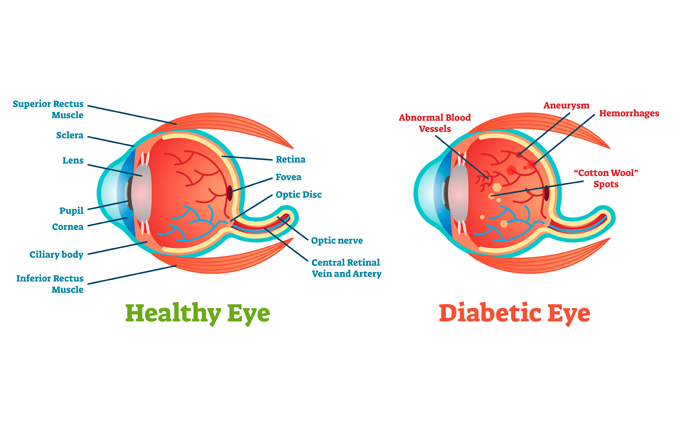
Over time, too much sugar in your blood can block tiny blood vessels of the retina, cutting off its blood supply.
As a result, new vessels grow, but they are fragile and eventually leaks leading to diabetic retinopathy.
There are two types of diabetic retinopathy:
- Early diabetic retinopathy. In this more common form — called nonproliferative diabetic retinopathy (NPDR) — new blood vessels aren't growing (proliferating).
- Advanced diabetic retinopathy-more severe type, known as proliferative diabetic retinopathy in which newly formed blood vessels leak.
- Manage your diabetes with proper blood sugar level monitoring.
- Glycosylated hemoglobin test, or hemoglobin A1C test, reflects your average blood sugar level for the two- to three-month period before the test. It should be under 7%.
- Keep blood pressure and cholesterol under control.
- Quit smoking.
- Pay attention to vision changes.
- Having diabetes for a long time or its poor control
- High blood pressure and cholesterol level
- Pregnancy
- Tobacco use