The Department of Dermatology (DVL), Cosmetology and Lasers aims for authentic management of skin diseases. Through the well-equipped department at this Dermatology hospital, the concerned patients can access a wide range of treatment and specific therapies.
Department Highlights
Some of the highlights of the department has been given below.
Some of the speciality clinics offered by the Department of Dermatology (DVL), Cosmetology and Lasers are given below.
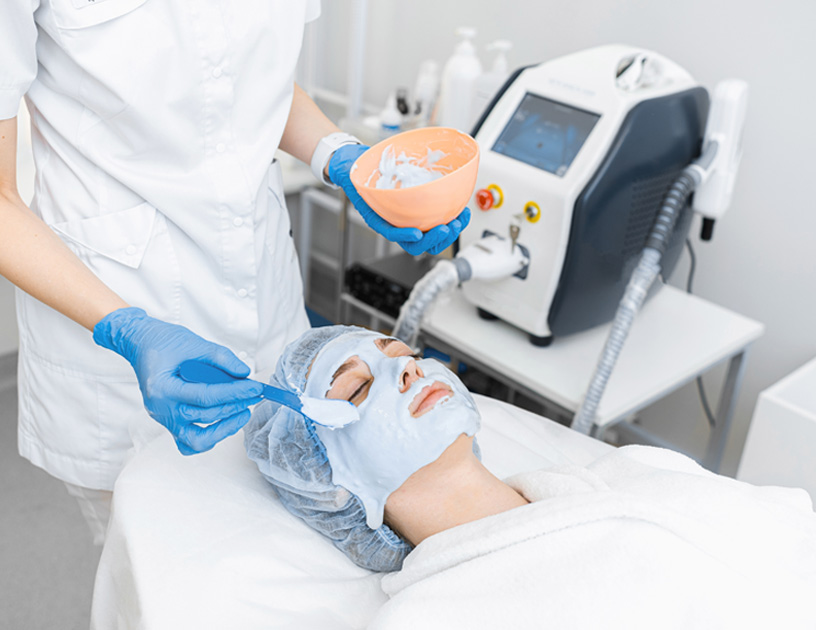
The diagnostic and clinical services offered by the Department of Dermatology (DVL), Cosmetology and Lasers are divided into three procedures – Dermatological, Cosmetological and Laser treatment in Jaipur.
The following dermatological procedures will be available at the department.
The departments offer the given Cosmetological procedures to the patients
The department offers the listed laser procedures to all patients.


“We have an excellent Dermatology department providing all dermatological & cosmetic procedures services.
We are removing hair, warts, tattoo, removal of acne scars, stretch marks & wrinkles by laser therapy, chemical peeling of the face, dermabrasion and face lifting procedures, Medi facials for dark circles and blemishes, PRP for hair loss, and Phototherapy for psoriasis and white spots.
JNU Hospital's vision is to provide world-class treatment by experienced doctors to all patients at affordable rates.”
At Division of Dermatology, Cosmetology & lasers of JNU, we invest our efforts, time, and expertise to detect and treat various types of Ailments.
A very common but highly contagious ectoparasitic infestation of skin by human itch mite (Sarcoptes scabiei var hominis) Predominantly though a disease of children it affects people of all races and social classes worldwide.
View DetailPsoriasis is a complex, chronic, multifactorial, inflammatory disease that involves hyperproliferation of the keratinocytes in the epidermis, with an increase in the epidermal cell turnover rate Environmental, genetic, and immunologic factors appear to play a role Characterised by red, scaly, sharply demarcated indurated papules and plaques of various sizes
View DetailA chronic, immune-mediated, pruritic, inflammatory skin condition seen in atopic individuals. Marked by alternating periods of remission and flare-ups. A result of complex interplay between environmental, immunologic, genetic and pharmacologic factors. Aggravated by infection, psychological stress, seasonal changes, irritants, and allergens.
View DetailInfestation of humans with lice 3 species affect humans Pediculus humanus capitis: head louse. Pediculus humanus corporis: body louse. Phthirus pubis: pubic or crab louse.
View DetailWarts are viral infection caused by human pappiloma virus characterised by papules or plaques in various parts of body
View DetailUrticaria is derived from Latin word “Urtica” meaning stinging nettle. It is a cutaneous reaction pattern consisting of transient, dermal swellings in form of wheals or angioedema. Individual wheals are pruritic, pink or pale swellings of superficial dermis that have red flare around them and usually subside within 24 hours.
View DetailAlso known as soft chancre. Acute, autoinoculable, STI caused by Hemophilus ducreyi. Males affected more commonly.
View DetailPityriasis rosea (PR) is an acute self-limiting, papulosquamous inflammatory disease of uncertain etiology, characterized by multiple erythematous scaly patches over the back and trunk along the cleavage lines.
View DetailLichen planus (LP) is a chronic inflammatory disease of unknown etiology affecting skin and mucous membranes, hair and nail. Clinically characterized by pruritic, pink, polygonal, violaceous, flat topped, papular lesions.
View DetailIntensely pruritic, chronic, recurrent, papulovesicular disease. Underlying gluten-sensitive enteropathy - may be asymptomatic.
View DetailSystemic sclerosis is a multisystem autoimmune disorder characterized by vascular abnormalities, connective tissue sclerosis and atrophy.
View DetailHirsutism is a male pattern of secondary or post-pubertal hair growth occurring in women. It arises in the moustache and beard areas at puberty.
View DetailAGA is the most common type of diffuse thinning of the hair and balding that occurs in adult males. Symptoms and complication It is characterised by a receding hairline and hair loss on the top and front of the head. A similar type of hair loss in women, female pattern hair loss, results in thinning hair on the mid-frontal area of the scalp Psychological impact: hair loss can be associated with low self-esteem, depression, introversion, and feelings of unattractiveness Causes It is due to a combination of hormones (androgens) and a genetic predisposition Diagnosis: Clinical Treatment: Platelet rich plasma therapy Hair replacement / transplantation Cosmetics Micropigmentation (tattoo) to resemble shaven scalp Hairpieces Minoxidil solution Finasteride tablets
View DetailVitiligo is an acquired depigmenting disorder of the skin, in which pigment cells (melanocytes) are lost. Symptoms and complication It presents with well-defined milky-white patches of skin (leukoderma). Vitiligo can affect any part of the body. Complete loss of pigment can affect a single patch of skin, or it may affect multiple patches. Vitiligo results in reduced quality of life and psychological difficulties in many patients. Causes Vitiligo is due to the loss or destruction of melanocytes, which are the cells that produce melanin: Autoimmunity Genetic susceptibility Diagnosis: Clinical Treatment: General measures Cosmetic camouflage: Make-up, dyes and stain, Micropigmentation or tattooing Topical: Corticosteroid creams tacrolimus ointment. Phototherapy: Systemic immunosuppressants like steroids and Surgical treatment.
View DetailMelasma is a common acquired skin disorder that presents as a bilateral, blotchy, brownish facial pigmentation. Symptoms and complication: Melasma presents as bilateral, asymptomatic, light-to-dark brown macules or patches with irregular borders. Melasma can have a severe impact on quality of life due to its visibility. Causes and prevention: The cause of melasma is complex; it has been proposed to be a photoageing disorder in genetically predisposed individuals. Risk Factors: Family history, Sun exposure, Hormones — pregnancy, oral contraceptives, hormone replacement therapy, Medications and scented products Diagnosis: Clinical, Woods lamp Treatment: General measures: Year-round, life-long sun protection — broad-brimmed hat, broad-spectrum sunscreen Discontinue hormonal contraception if possible Cosmetic camouflage. Topical therapy: Azelaic acid, Kojic acid, Ascorbic acid, etc Oral Tranexamic acid Chemical peels and lasers
View DetailThe term "scarring" refers to a fibrous process in which new collagen is laid down to heal a full-thickness injury. It affects 30% of those with moderate or severe acne vulgaris. Symptoms and complication: Cosmetic concern, Adverse psychosocial impact Causes and prevention: Acne scars occurs secondary to healing of acne. To reduce the chance of scarring, seek treatmentfor your acne early. Risk Factors: Incomplete/ delayed treatment, Use of steroids, Repeated picking of acne Treatment: Cosmetic camouflage Dermabrasion, Microneedling Subcision , Excision and suturing TCA Cross Lasers Fillers
View DetailStretch marks are fine lines on the body that occur from tissue under your skin tearing from rapid growth or over-stretching Symptoms and complication: Cosmetic concern An area of skin becomes flattened and thin with a pink colour Itching Reddish or purplish slightly swollen lines develop perpendicular to the direction of skin tension. Causes: Pregnancy Adolescents undergoing growth spurts (thighs, buttocks, breasts) Body-builders Obese or overweight people Oral or topical corticosteroids Cushing syndrome Diagnosis: Clinical Treatment: Moisturizers Topical retinoid therapy Chemical peels Fractional laser Micro needling Platelet rich plasma
View DetailFreckle is a small, light brown or tan mark on the skin. There can be hundreds or thousands of them on exposed skin. Freckles are particularly common in fair-skinned people Causes: Inherited, ultraviolet radiation in sunlight. Clinical features: Light to dark brown flat spots, found on sun-exposed sites, particularly the nose and cheeks. More prominent during summer. Diagnosis: Clinical Treatment: Broad-spectrum, sun protection factor 50+ sunscreen Cosmetic camouflage Laser
View DetailDark circles under the eyes describe a common appearance of the lower eyelids that has various causes. Causes: Increased pigmentation (melanin) Loss of fatty tissue in the eyelid or around the eye Bulging fat and muscle loss Puffy eyelids Thin, translucent skin Shadowing due to anatomic shape of the orbit. Risk factors: Elderly, Genetic predisposition, Sun exposure, Dermatitis, Rubbing or scratching the eyes, Smoking, Fatigue or lack of sleep, dehydration (sunken eyes). Diagnosis: Clinical Treatment: Adequate sleep Smoking cessation Cold compresses Protection from sun exposure using sunglasses Topical agents Chemical peels Laser Fillers (dermal implants):
View DetailPostinflammatory pigmentation is temporary pigmentation that follows injury (eg. a thermal burn) or inflammatory disorder of the skin (eg. dermatitis, infection). It is mostly observed in darker skin types. Causes and Risk factors: Darker-skinned individuals, Sun-induced skin conditions such as photodermatitis Drugs: Antimalarial drugs, clofazimine. Symptoms: Postinflammatory hyperpigmented patches are located at the site of the original disease after it has healed. The lesions range from light brown to black in colour. The patches may become darker if exposed to sunlight (UV rays). Diagnosis: Clinical Treatment: Broad-spectrum sunscreen Cosmetic camouflage. Topical creams Chemical peels Lasers.
View DetailA skin biopsy is a procedure to remove cells or skin samples from your body for laboratory examination. A doctor uses a skin biopsy to diagnose skin conditions and remove abnormal tissue.

Electro surgery is used in dermatological procedures to stop bleeding (haemostasis) or to destroy abnormal skin growths.
Localized cryotherapy is a treatment performed by dermatologists to freeze and remove skin lesions and abnormal tissues.
Microneedling is a minimally invasive procedure that’s used to treat various skin problems by stimulating collagen production.
PRP therapy is a very simple procedure in which the patient’s blood is drawn, then spun in a centrifuge machine and the Platelet Rich Plasma is separated and removed from the rest of the blood which is rich in growth factors. Subsequently, the PRP which is thus obtained is injected in the scalp or face.
Q switched Nd-Yag is used for tattoo removal. It produces the 1064 nm and 532 nm wavelengths, which are the most popular wavelengths used in tattoo removal.
Fractional Carbon dioxide (CO2) lasers are one of the latest advances in non-surgical skin rejuvenation treatments.
Laser hair removal treatment is a non-invasive, aesthetic procedure that uses a highly concentrated beam of laser light to penetrate the hair follicles.
JNU is home to some of the most eminent doctors in the world, most of whom are pioneers in their respective arenas and are renowned for developing innovative and revolutionary procedures