Obstetrics and Gynecology focus on dealing with the medical conditions involved in women healthcare and the reproductive system, which includes care during pregnancy, childbirth and puerperium (the period immediately after pregnancy).
Since special care is required during pregnancy, the team of experienced and the best gynecologist in Jaipur at JNU Hospital offers 24x7 medical and paramedical backup to provide care to all emergencies, high-risk pregnancies and gynaecological disorders.

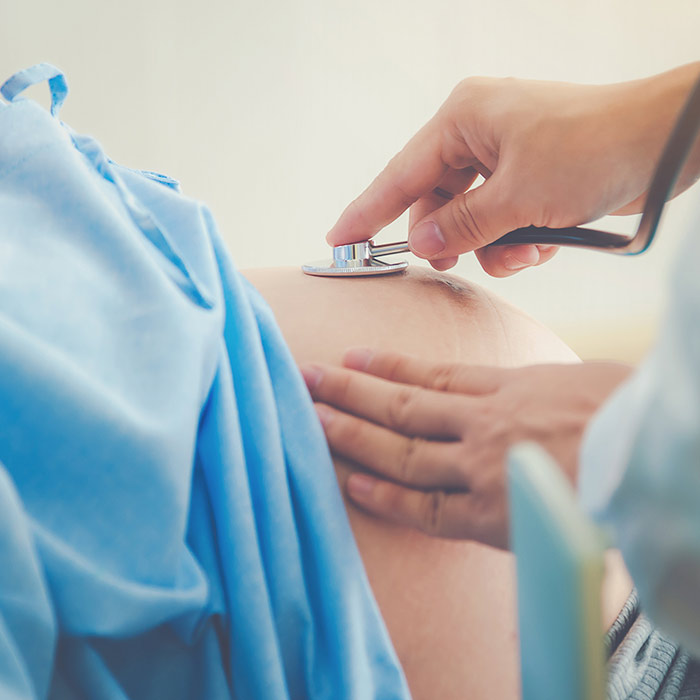
The major highlights of the Department of Obstetrics and Gynecology are given below.
The speciality clinics and their functions available at the Department of Obstetrics and Gynecology, the best hospital for delivery are given below.
High-Risk Pregnancy & Labour Management
The following diagnostic and clinical services will be accessible to all patients at the best gynecologist hospital in Jaipur.

At JNUIMSRC, the Department of Obstetrics & Gynecology with an enthusiastic team of experienced and committed doctors seamlessly provide not only the treatments to ailments but deliver a holistic, tender and loving care to our female patients. Equipped with the latest state of the art interventions with utmost expertise in Hysteroscopy, Laparoscopy, Colposcopy and every dimension of female health and family wellbeing, we provide continuous support and solutions through specialty clinics in the field of infertility, menopause, endocrinology, family welfare and high risk pregnancy. The department pledges and serves to deliver equitable personalized care to every woman and bring in high performance and quality health care at affordable prices.
At Division of Maternity, Infertility, Foetal medicine & Gynecology of JNU, we invest our efforts, time, and expertise to detect and treat various types of Ailments.
A review of the international evidence found that the prevalence of PCOS as high as 26% among some populations, though ranges between 4% and 18% are reported for general populations. Despite its high prevalence, the exact cause of PCOS remains uncertain, and there is no known cure.
View DetailEndometriosis is a disease of the female reproductive system in which cells similar to those in the endometrium, the layer of tissue that normally covers the inside of the uterus, grow outside the uterus.
View DetailAbnormal uterine bleeding (AUB), also known as atypical vaginal bleeding, is vaginal bleeding from the uterus that is abnormally frequent, lasts excessively long, is heavier than normal, or is irregular.
View DetailUterine fibroids, also known as uterine leiomyomas or fibroids, are benign smooth muscle tumors of the uterus. Most women have no symptoms while others may have painful or heavy periods.
View DetailInfertility is the inability to become pregnant after one year of intercourse without contraception involving a male and female partner. Estimates range from 12% to 28%. Male infertility is responsible for 20–30% of infertility cases, while 20–35% are due to female infertility, and 25–40% are due to combined problems in both parts. In 10–20% of cases, no cause is found.
View DetailEctopic pregnancy is a complication of pregnancy in which the embryo attaches outside the uterus. Signs and symptoms classically include abdominal pain and vaginal bleeding, but fewer than 50 percent of affected women have both of these symptoms.
View DetailA molar pregnancy — also known as hydatidiform mole is a rare complication of pregnancy characterized by the abnormal growth of trophoblasts, the cells that normally develop into the placenta.
View DetailAntepartum haemorrhage (APH) defined as bleeding from the genital tract in the second half of pregnancy, remains a major cause of perinatal mortality and maternal morbidity in the developed world.
View DetailMalpresentation refers to when your baby is in an unusual position as the birth approaches.
View DetailA multiple pregnancy from a single zygote is called monozygotic A multiple pregnancy from a single zygote is called monozygotic, from two zygotes is called dizygotic, or from three or more zygotes is called polyzygotic.
View DetailGrowth hormones is most abundaust ant pit hormone, prod by pit sometotroph cells produced begins early in fetal life & continuous throughout the life.
View DetailAn absomal recessive disorder which occurs due to mutation of CFTR gene mainly affecting the lungs & pane-areas.
View DetailInherited disorder of hemoglobin synthesis characterized by reduced or absent one or more globin chasin of Hb. Types: Alpha Thalassemia and Beta Thalassemia
View DetailKlinefetter syndrome is a genetic disorder that affects male. It occurs when a boy is born with one or more extra x-chromobomes.
View DetailEdwards syndrome It is a genetic disorder caused by the presence of all or past of an extra 18th chromosome. Second most common trisomy.
View DetailNeutral tube defects are one of commonest birth defects, occurring due to the failure of normal fusion of neural plate to form neural tube during the first 28 days following conception. Etiology: Exact cause is not known many facts may be responsible for causing neural tube defects: Genetic causes Nutritional factors poor mistake of folic acid Intake of anti-epileptic medications during pregnancy.
View DetailDowns syndrome is a birth defect caused by trisomy of 21. It is most important genetic disease prevalent world-wide. Incidence is high 1 in 400-1400 newborns. Therefore screening provides important part in prenatal case. For this non incentive screening developed for early diagnosis. Treatment and pretension of morbidity.
View DetailIt is also called henny turner. Disorders of gonadal development. Clinical features: Short statue (height less than 150 cm) Webbing of the neck Broad shield chest. Low hair line on the neck Lymphedema Autoimmune disorders. Micrognathia (condition in which the lower jaw is undersized.) Cubitus valgus (forearm in angled out away from the body when the am is fully extended.) Investigations: Sex chromatin study is negative (Mosaic pattern) Serum E2 is very low. Serum FSH and LH are increased.
View DetailCalled as patau syndrome. A person has an extra chromosome and 50% baby sensitive beyond their first 10 days.
View DetailHysterectomy, in the literal sense of the word, means merely removal of the uterus.

Hysteroscopy is the inspection of the uterine cavity by endoscopy with access through the cervix.
Caesarean delivery, is the surgical procedure by which one or more babies are delivered through an incision in the mother's abdomen, often performed because vaginal delivery would put the baby or mother at risk.
Labor is a physiologic process during which the fetus, membranes, umbilical cord, and placenta are expelled from the uterus.
Intrauterine insemination (IUI) is the deliberate introduction of sperm into a female's cervix or uterine cavity for the purpose of achieving a pregnancy.
At least 25% refuses can survive in cases of fetal anemia by fetal blood transfusion. The survival rate is high if Rh-disease of hemoglobin opethies are the kosan of anemia. The technique is same as that of fetal blood sampling.
This is needed for diagnosis of inherited hemoglobin disorders, inform errors of metabolism, baryotyping, fetal viral infection, Rh, disease, uexplained hydrops and fetal anemia. The aspiration of fetal blood is usally under taken from the umbilical cord around 18 weeks. While preparing the patient for procedure counseling is needed about the risks of fetal loss, trauma, bloodloss, preterm rapitune of membaren sensitization DNA screening for any specific disease may require both direct indirect methods. This procedure is easy when placounta is anterior there is no need of fetal sedation.
During this surgery is very useful if fetal kidneys are functional. There is evidena of urethsol obs tranction under USG guidance a double pig tad Rodeck or Harrison shung catheters is threaded into the trocar sheath prior to removal of style wire using push roads, the proximal segment in pushed into fetal bladder while the distol end positioned in the amniotic space. Fetus is needed to be sedated by fentanye in this technique.
New techniques using fetoscopy are now available to manage twin transfusion therapy (tits) using neodymium yag laser, postenior wethral valve or ureteric value ablation by yog laser can undertake. Congenital cystic adenomatoid mal formation (CCAM) of the long are now manageable by fetal surgery. Other fetal tumors such as cervical lymphagioma or sacrxoccygal treatment or NTD such as open spina bifidat hydercxafhal, we are now possible to be treated by fetal surgery.
It is performed usually around 16 week (15 to 19 weeks) this is indicated for chromosomal abnormalities fetal screening in x-linblood clauses, additional confirmation of N.T.D. (alpha fi to protein and a ctyl choa nasterrase) in form metabolic emon detection (enzymes, metalrolites), DNA nobing, assessment of rhesus senntization.
Treatment Procedure:
Patient is prepared following a comprehensive counseling & Ad undertaken while carrying for ultra surgical radio logical care. The risks of delay in results, infection, hematoma are always considered carefully. This is also discussed with the patient that there are almost 1 % risks of miscarriage trauma, hemorrhage, preterm rapture of memleranes palom and Rh semetization, deformities pregnancy loss is app. 0.6 to 0.9% higher after C.V.S. as composed to amniocentesis.
JNU is home to some of the most eminent doctors in the world, most of whom are pioneers in their respective arenas and are renowned for developing innovative and revolutionary procedures