The Department of Neuro & Spine Surgery at JNUIMSRC, Jaipur focuses on the diagnosis and treatment of diseases related to the nervous system that includes brain disorders and problems with the skull, spinal cord & spinal column.
The main objective of the department is to provide affordable medical care through its state-of-the-art facilities and the team of expert neurosurgery specialist in Jaipur and well-trained staff. The faculty is experienced and on the same standard as that of any corporate hospital in India.
Quality care and rehabilitation programs are offered to the patients through the specialized clinics of the department for spine and spinal disorders, stroke, epilepsy, etc. The clinics work with other specialist teams to offer the programs based on the patient’s condition and illness.
To provide the best and safe treatment to the patients, the department is well-equipped with all of the required modern gadgets (opening microscope, high-speed drill, CUSA, endoscope, etc.) and diagnostic modalities (MRI, NCV, EEG, etc.) with world-class infrastructure (modular OT, Neuro ICU, etc.).
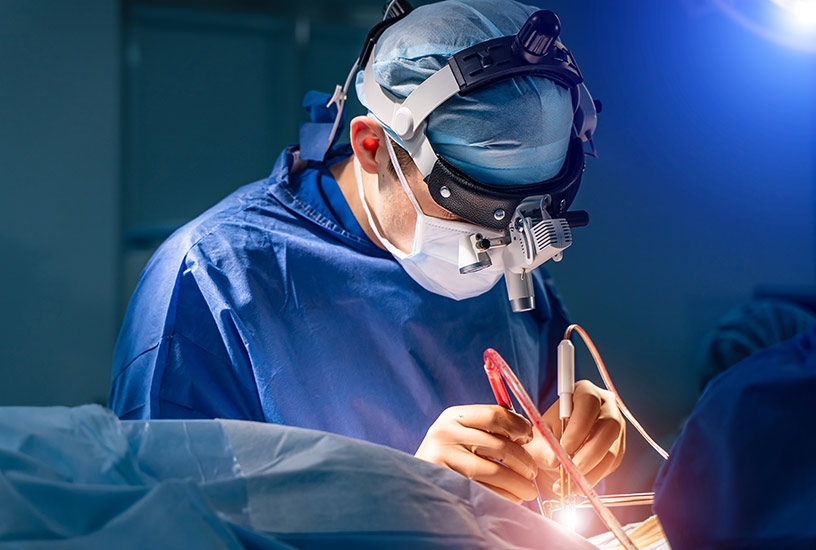
At Division of Neuro & Spine Surgery of JNU, we invest our efforts, time, and expertise to detect and treat various types of Ailments
Head injuries are also called as brain injury or traumatic brain injury (TBI) depending on the extent of head trauma. A severe head injury can lead to disability and even death. The different types of head injuries are a concussion, skull fracture, and intracranial hematoma (ICH). The symptoms of severe head injury can range from mild to severe, like a bump, nausea, headache, blurred vision to loss of consciousness, sweating, slurred speech, etc. Treatments The best treatment involves the first diagnosis of head injury. The common diagnostics include- blood tests, X-ray, CT or CAT Scan. Depending on your age, overall health, medical history, type and extent of the head injury the treatment is planned. Also, considered are your tolerance to the medication and therapies. Normal treatment- Ice, rest, topical antibiotic ointment and an adhesive bandage. In case of severe injury- stitches, moderate sedation, use of a ventilator and very severe cases need surgery to treat the injury.
View DetailA brain hemorrhage is a type of stroke and it is caused by an artery in the brain bursting and causing localized bleeding in the surrounding tissues. This bleeding kills brain cells and it is called a Brain Hemorrhage or Brain Stroke. With enough bleeding, the brain can become so compressed that oxygen-rich blood is unable to flow into the brain tissue. The lack of oxygen can lead to brain swelling, referred to as cerebral edema. There are several risk factors and causes of Brain Hemorrhage like Head Trauma, High Blood Pressure, Aneurysm, Bleeding Disorder, Blood Vessels Abnormalities. There are different kinds of brain hemorrhage and it can be treated accordingly. This treatment depends on the size of the hemorrhage, location and swelling which causes. Treatments Treatment for brain hemorrhage depends on the severity of the hemorrhage, patient's condition and cause of hemorrhage. Treatment options can be surgical and Non-surgical. For Surgical Treatment : Burr hole, Craniotomy, External ventricular drain (EVD), Hemicraniectomy, Clip or repair an aneurysm using a metal clip to close the blood vessel. For Non-Surgical Treatment: - It can be monitored and strict regulation on high blood pressure and Medicine should be prescribed if the blood clotting is not major and Supportive care is required in ICU.
View DetailThe brain tumor is a mass of abnormal cells into your brain that hinders its activities. There are different types of brain tumors. Some are benign (noncancerous) and some are malignant (cancerous). Any symptoms like new headaches, vomiting, blurred vision, numbness, difficulty in balance, confusion, and seizures, etc. The brain tumor can also cause brain stroke. The tumor can be detected using methods like neurological examination, which includes checking vision, hearing, balance, coordination, strength, and reflexes. Another method is through imaging tests; mostly MRI Scan is used but some specialists use Computerized Tomography (CT). Depending on the location, size, and type of the brain tumor, the treatment is done. Also, the amount of pressure put by a tumor on the vital part of the brain, whether the tumor is spread to the other part of the CNS and body as well as patient’s overall health and preferences are considered to decide the treatment. This bleeding kills brain cells and it is called a Brain Hemorrhage or Brain Stroke. With enough bleeding, the brain can become so compressed that oxygen-rich blood is unable to flow into the brain tissue. The lack of oxygen can lead to brain swelling, referred to as cerebral edema. There are several risk factors and causes of Brain Hemorrhage like Head Trauma, High Blood Pressure, Aneurysm, Bleeding Disorder, Blood Vessels Abnormalities. There are different kinds of brain hemorrhage and it can be treated accordingly. This treatment depends on the size of the hemorrhage, location and swelling which causes. Treatments Supportive Care using medications: Corticosteroid is given that reduces the pain by decreasing the swelling in the brain. Anti-seizure medicine. Surgery: This involves surgical removal of the tumor from the brain. This complicated process requires a greater level of precision. Radiation Therapy: There are different types of radiation therapy that can be used depending on the condition of the tumor. These include conventional radiation therapy, 3D-CRT, IMRT, Proton Therapy and Fractionated Stereotactic Radiation therapy. Chemotherapy: In this, various drugs are used to kill the tumor cells, usually by limiting their growth. Targeted Therapy: Other than standard chemotherapy this therapy targets the specific tumor genes, proteins, or the tissue environment that promote the growth of the tumor and its survival. It limits the damage to healthy cells.
View DetailMigraine is a headache disorder that has a symptom of throbbing like a headache in the particular area of the brain that lasts from a few hours to more than 72 hours. The most common symptoms include nausea, vomiting, sensitivity to light and sound. It is caused by the Emotional Triggers like Stress, depression, anxiety, excitement and shock etc. The Physical Triggers include Tiredness, insufficient sleep, physical overexertion and shoulder and neck tension. Even the hormonal changes and some foods or allergens can trigger the migraine attack. Treatments Identify the exact triggers that initiate the onset of migraine headache and devise the exact treatment plan as per the individual case. Teach the patients to learn activities and behaviors that reduce the risk of experiencing a migraine. Better adoption of coping methods for pain reduction when a migraine does occur.
View DetailThe back pain is of two types. One is lower back pain, which occurs in the bony lumbar spine, discs between the vertebrae, ligaments around the spine, spinal cord, lower back muscles, abdominal and pelvic internal organs. The upper back pain is due to disorders of the aorta, tumors in chest and spine inflammation or tuberculosis. The problem in muscles, ligaments, tendons, disks, and bones cause back pain. The reason can be anything from strain, structural problem (ruptured disc, sciatica, arthritis, osteoporosis), movement and posture, cancer of the spine, infection of the spine and shingles, etc. Constant pain, weight loss, numbness around the genitals, anus or buttock and pain that reaches the leg or knee are symptoms when you should visit the doctor without any delay. Treatments Treatment to back pain depends on the severity that requires proper diagnosis. Diagnostics include physical examination, X-rays, MRI Scan, CT Scan, Bone Scan, EMG (Electromyography). Use of pain relief medicines and anti-inflammatory drugs Physical therapy like applying ice, heat, ultrasound, and electrical stimulation, etc. Surgery in cases of fusion of two vertebrae, artificial disc insertion, discectomy and partial removal of the vertebra.
View DetailA spinal fracture can cause bone fragments to pinch and damage the spinal nerves or spinal cord. Spinal injuries can range from mild ligament, muscle strains to fractures and dislocations of the bony vertebrae. You may experience pain, difficulty in walking, or unable to move your arms or legs depending on the severity of the injury. Many small fractures heal with conservative treatment. However, in the case of severe fractures, there is a need for surgery to realign the bones. The treatment of the spinal fracture depends on fracture type and the degree of instability. Treatments Depending on the reason behind the fracture in the spine, the treatment also varies. Conservative treatment- This procedure usually is based on rest and medication, but it takes a longer duration to heal. Balloon Kyphoplasty- This is a minimally invasive method using positive pressure balloons to lift the fractured bones and correct the anatomical position. Spinal Fusion Surgery- This procedure uses the metal plates and screws to create a bond between two or more adjacent vertebrae.
View DetailA spinal tumor is abnormal growth of the cell in the spinal column of an individual. It is of two types: primary and secondary. The primary tumor originates in the spine itself but is very rare occurring. The secondary tumor originates elsewhere and spreads to the spinal column. The primary tumor is benign (non-cancerous) in nature and the secondary tumors are malignant (cancerous). The Usual symptom of spinal tumor is severe back pain that is unrelated to movement. In addition to this, the back pain cannot be improved with rest or physical rehabilitation. The other symptoms include sciatica, numbness, and partial paralysis. The basis of treatment depends on the degree of severity and location of the tumor in the spinal column. Treatments The treatment of the spinal tumor varies from patient to patient depending on the medical condition, preferences of the patient, tumor type and presence of paralysis. Any treatment plan emphasizes on the reduction of pain, maximizing neurological function and patient’s life quality. Non- surgical treatment includes chemotherapy and or radiation therapy. Surgical treatment includes - Tumor resection Neurological decompression Surgical stabilization of the cervical, thoracic, lumbar and/or sacral spine. Congenital Spinal Disorders / Deformities This includes spinal dysraphism like myelomeningocele, lipomyelomeningocoele, spina bifida, etc. along with kyphoscoliosis and craniovertebral junction (CVJ) anomalies. The patient may have pain, deformity, weakness of limbs or tethered cord syndrome. Treatments Treatment is planned depending upon the symptoms and age of presentation. Spinal dysraphism needs excision and de-teethering of cord. Kyphoscoliosis needs correction of deformity and spinal stabilisation procedures. CV junction anomalies need surgical correction and stabilisation. Procedures commonly done are: C1-C2 fusion, Occipito- cervical fusion, Odontoid screw fixation. A prerequisite to such procedures is a detailed CT scan of CVJ with 3D reconstruction and MRI. Vertebral artery CT angiogram may be needed. Screws are put into the bones and anchored together with contoured rods. Decompression done as per requirement. Bone grafts facilitate fusion over time.
View DetailCraniotomy is usually done for Head Injury, ICH, Brain Tumours or Vascular Malformations (Anerysms, AVMs, etc).

Endoscopic Brain Surgery is a minimally invasive procedure done for cranial disorders.
Spinal fixation & fusion is done for spinal injuries, spinal tumours, craniovertebral junction disorders,
Minimally invasive spine surgery includes Percutaneous Pedicle Screw Fixation, Endoscopic / Microscopic lumbar discectomy and Kyphoplasty/Vertebroplasty.
Spinal canal stenosis can be due to prolapsed intervertebral discs/degenerative spinal disorders,
JNU is home to some of the most eminent doctors in the world, most of whom are pioneers in their respective arenas and are renowned for developing innovative and revolutionary procedures