Since its establishment in 2015, the Department of Respiratory Medicine has evolved to manage a wide range of respiratory diseases spanning from asthma, COPD, Pneumonia, ILDs, Pleural based diseases and sleep disorders as well as tuberculosis.
A well-trained faculty oversees the patients and offers the best health outcomes at the best hospital for pneumonia, while emphasizing quality care, efficient diagnosis and management. The department has advanced state-of-the-art equipment in pulmonary procedures such as Ultrasound based pleural procedures, Bronchoscopy, Allergy clinic, Spirometry and DLCO and Level 1 sleep lab facility. There is also the involvement of the department in clinical research activities, academics and training.

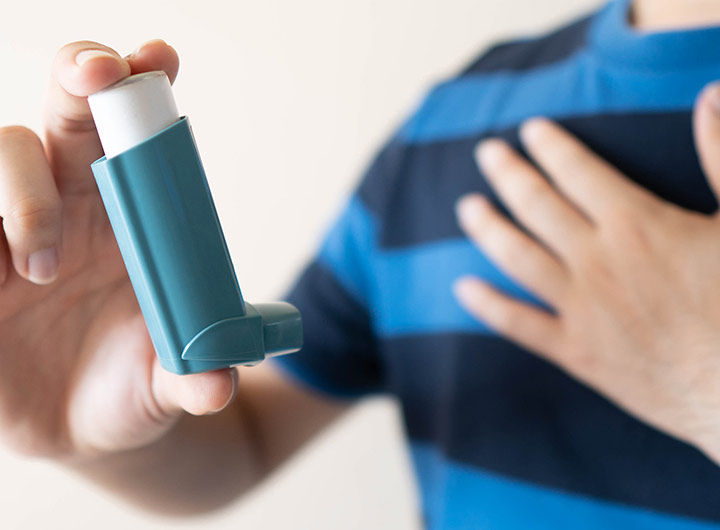
The list of speciality clinics offered by the Department of Respiratory Medicine is given below.
The details regarding the diagnostic and clinical service are listed below.
Respiratory outpatient services on all days (9 AM to 5 PM) by the best lungs specialist in Jaipur.
The in-patient clinic has 30 general beds and 10 beds in the respiratory intensive care unit and MDR TB ward.
Skin prick test
Spirometry and diffusing capacity measurements by CO diffusion
Fibreoptic and video bronchoscopy with BAL, EBB, TBLB, TBNA
Chest sonography, ICD/ Pigtail insertion, Pleural biopsy
Six minutes walking test
Level 1: Polysomnography, limited channel sleep study, Auto-CPAP titration, Manual CPAP titration


At Division of Respiratory & Sleep Medicine of JNU, we invest our efforts, time, and expertise to detect and treat various types of Ailments.
Bronchiectasis is a long-term condition where the airways of the lungs become widened.. leading to a build-up of excess mucus that can make the lungs more vulnerable to infection.
View DetailBronchitis is an inflammation of the lining of your bronchial tubes which carry air to and from your lungs. People who have bronchitis often cough up thickened mucus, which can be discolored. Bronchitis may be either acute or chronic.
View DetailChronic obstructive pulmonary disease (COPD) is a chronic inflammatory lung disease that causes obstructed airflow from the lungs. Emphysema and chronic bronchitis are the two most common conditions that contribute to COPD. These two conditions usually occur together and can vary in severity among individuals with COPD.
View DetailInterstitial lung disease describes a large group of disorders, most of which cause progressive scarring of lung tissue. The scarring associated with interstitial lung disease eventually affects your ability to breathe and get enough oxygen into your bloodstream. Interstitial lung disease can be caused by long-term exposure to hazardous materials, such as asbestos. Some types of autoimmune diseases, such as rheumatoid arthritis, also can cause interstitial lung disease. In some cases, however, the causes remain unknown.
View DetailLung abscess is a pus-filled cavity in your lung surrounded by inflamed tissue. It usually results from breathing bacteria that normally live in your mouth or throat into the lungs, leading to an infection.
View DetailLung cancer is a type of cancer that begins in the lungs. Lung cancer is the leading cause of cancer deaths worldwide. People who smoke have the greatest risk of lung cancer, though lung cancer can also occur in people who have never smoked. The risk of lung cancer increases with the length of time and number of cigarettes you've smoked. If you quit smoking, even after smoking for many years, you can significantly reduce your chances of developing lung cancer.
View DetailPleural effusion is an unusual amount of fluid around the lung. The pleura is a thin membrane that lines the surface of your lungs and the inside of your chest wall. When you have a pleural effusion, fluid builds up in the space between the layers of your pleura.
View DetailA pneumothorax occurs when air leaks into the space between your lung and chest wall. This air pushes on the outside of your lung and makes it collapse. A pneumothorax can be a complete lung collapse or a collapse of only a portion of the lung. A pneumothorax can be caused by a blunt or penetrating chest injury, certain medical procedures, or damage from underlying lung disease.
View DetailTuberculosis (TB) is caused by bacteria (Mycobacterium tuberculosis) that most often affect the lungs. Tuberculosis is curable and preventable. People infected with TB bacteria have a 5–10% lifetime risk of falling ill with TB. Those with compromised immune systems, such as people living with HIV, malnutrition or diabetes, or people who use tobacco, have a higher risk of falling ill.
View DetailIt is a very common medical procedure in the practice of modern medicine. In this transfusion of either whole blood or its component such as blood cell or plasma, clotting factors.

Bronchoscopy is a procedure to look directly at the airways in the lungs using a thin, lighted tube (bronchoscope).
CT-guided lung biopsy is a procedure to collect small tissue samples from an abnormal area in the lung.
A chest tube can help drain air, blood, or fluid from the space surrounding your lungs, called the pleural space.
Thoracentesis (syn. Thoracocentesis/ Pleural tap / Needle thoracostomy / Needle decompression) is a minimally invasive procedure to remove fluid or air from pleural space for diagnostic or therapeutic purposes.
The pleura is a double layer of membranes that surrounds the lungs. A pleural biopsy is a procedure to take a small piece of the pleura
JNU is home to some of the most eminent doctors in the world, most of whom are pioneers in their respective arenas and are renowned for developing innovative and revolutionary procedures